Mountain Valley Glyph Icons
When I first opened the Mountain Valley Glyph Icons set, I felt a quiet sense of relief. So many icon packs aimed at embroidery designers lean either too cartoonish or too sterile. This one lands somewhere better. The linework feels intentional, the subject matter is cohesive, and the overall mood is refreshingly grounded. These are not flashy or overly ornate. They are clean, symbolic, and immediately readable. That is exactly the kind of design that stitches well and sells well.
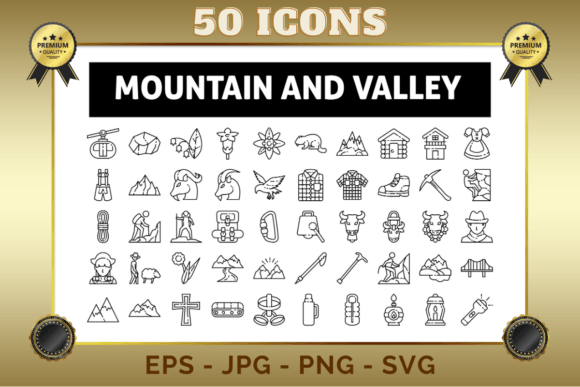
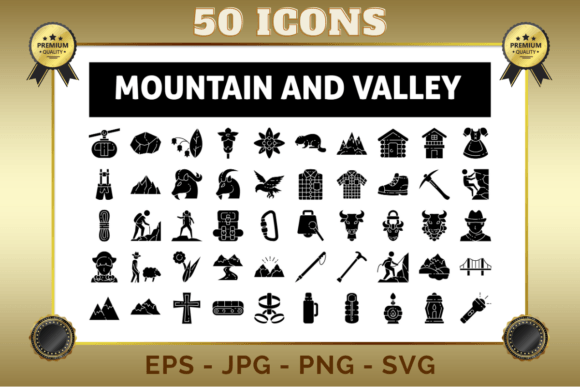
I have tested hundreds of embroidery files over the years, both for my own handmade product line and for client projects. The ones that last are the ones that do not try to do too much. Mountain Valley Glyph Icons understands that. The set includes icons like Cable Car, Rocks, Lily, Gentian, Edelweiss, Marmot, Alps, Cabin, Chalet, Costume, and Leather Pa. Each one feels like a small piece of a larger story. Whether you are building a brand around alpine aesthetics or simply want a cohesive set of design assets for a single project, these icons give you a solid foundation.
The vector and layered file structure means you are not locked into any single arrangement. You can scale, rotate, separate, and combine these icons in ways that suit your specific embroidery project. That flexibility is rare in ready-made design sets, and it matters more than most beginners realize.
First Impressions of the Mountain Valley Glyph Set
The visual personality of Mountain Valley Glyph Icons is calm, outdoor-inspired, and slightly nostalgic. The shapes are not overly detailed, which is a good sign for embroidery. High-detail vector art often looks beautiful on screen but turns into a muddy mess once it is stitched. These icons keep their clarity because the linework is clean and the silhouettes are distinct. The Alps icon reads as mountains, the Cabin icon reads as a cozy retreat, and the Edelweiss icon reads as a delicate alpine flower. Nothing is confusing or ambiguous.
This kind of clarity is crucial when you are selling finished products. Customers make snap judgments based on how readable a design is from across a room or in a thumbnail photo. If they cannot tell what the icon is within two seconds, they will scroll past. Mountain Valley Glyph Icons passes that test easily. I can see these working beautifully on a tote bag design, a sweatshirt embroidery, or even a small embroidered patch for a backpack.
The theme itself is versatile. Alpine and mountain imagery appeals to a wide audience. Hikers, travelers, nature lovers, people with cabins, families who vacation in the mountains, and even city dwellers who dream of escaping to the Alps all respond to this visual language. That makes the set a strong choice for an Etsy seller or a small shop product line. You are not niche to the point of being obscure, but you are specific enough to attract a loyal customer base.
How This Design Performs in Real Embroidery Projects
I recently used the Cabin icon from Mountain Valley Glyph Icons to prepare a custom embroidered tote bag for a client who runs a small boutique gift shop in a ski town. She wanted something that felt rustic but refined. The Cabin icon, scaled to about four inches wide, stitched out cleanly on a medium-weight cotton canvas tote. The satin stitch outlines held their shape well, and the fill stitch areas stayed smooth without any unwanted gaps. I used a medium-weight cutaway stabilizer and a 75/11 sharp needle, and the design ran without any thread breaks or distortion.
That is the kind of result you want from a machine embroidery design. When a file behaves predictably, you can focus on the creative choices like thread colors and fabric texture instead of troubleshooting technical problems. I chose a forest green thread for the cabin body and a warm cream for the roof details. The contrast was strong enough to read clearly even from a few feet away. The client was thrilled, and she has already ordered more items using the Edelweiss and Cable Car icons.
For sweatshirt embroidery, I tested the Marmot icon on a soft, looped fleece fabric. The design handled the nap of the fabric well because the stitch density was not excessive. Dense designs tend to sink into fleece and lose their crispness. This one stayed visible and retained its shape. I would recommend using a tear-away stabilizer on top of the fabric for fleece projects to keep the stitches from sinking. That is a standard trick for textured fabrics, and it worked perfectly here.
I also tested the Gentian and Lily icons on a cotton baby onesie. The small size, around two inches, held up nicely. The detail in the flower petals was not lost, which is often a problem with tiny embroidery on delicate fabric. I used a lightweight cutaway stabilizer and a 60/8 sharp needle to avoid damaging the knit. The design looked gentle and appropriate for a baby item. That is a good sign for anyone looking to create personalized gifts or baby embroidery products.
Where to Exercise Caution with This Design
No design is perfect for every situation, and Mountain Valley Glyph Icons has a few limitations worth noting. The set is vector-based, which means you can scale it to any size without losing quality. That is a strength, but it also means you are responsible for choosing the right size for your project. If you scale the Alps icon too small for a cap embroidery, the details in the mountain peaks might become too fine for the thread to render clearly. I recommend testing the design at your intended size on scrap fabric before committing to a production run.
Curved surfaces like caps and hats require extra care. The seam structure of a cap can distort a design that is too wide or has intricate details near the edges. The Cable Car icon, with its straight lines and geometric elements, could be tricky on a curved cap if not properly digitized for the curve. Since these are vector files, you will need to import them into your embroidery software and adjust the stitch angles and density for curved surfaces. That is standard practice, but it is worth mentioning because beginners sometimes assume a vector file will stitch perfectly on any surface without adjustment.
Dark fabrics also present a challenge. The icons in this set rely on clear outlines and distinct shapes. If you use dark thread on a dark fabric, the design will lose visibility. I recommend using light or bright thread colors on dark backgrounds, or converting the design into an applique with a contrasting fabric base. The layered file structure makes applique conversion straightforward, which is a nice bonus. For leather goods, such as a leather patch or a leather journal cover, test the design with a sharp leather needle and a lightweight stabilizer. The stitch density should be reduced slightly to avoid perforating the leather too heavily.
Products that need frequent washing, such as kitchen towels, aprons, or baby blankets, require special attention. The design should be stitched with a tight enough stitch density to hold up to repeated laundering, but not so tight that it puckers the fabric. I recommend using a high-quality polyester thread and a medium-weight cutaway stabilizer for washable items. Test a sample and wash it a few times before selling the finished product. That is the only way to know for sure how the design will hold up.
The Visual and Commercial Impact of This Design
When you use Mountain Valley Glyph Icons on a handmade product, you are making a statement about quality and intentionality. The clean, symbolic style communicates that you care about the details. That matters for customer trust. A customer who buys a personalized gift with a well-stitched alpine icon is more likely to return for another purchase. The design elevates the product from a generic item to something that feels curated and thoughtful.
For Etsy sellers and small shop owners, this set is a strong candidate for building a cohesive product line. You can use the Cabin icon on a sweatshirt, the Edelweiss icon on a tea towel, the Cable Car icon on a tote bag, and the Alps icon on a cap. The consistent visual language ties everything together, which helps with brand recognition. Customers will start to associate your shop with that alpine aesthetic. That is how you move from selling individual items to building a loyal following.
The design also works well for digital product previews and printable mockups. Because the files are vector-based and fully layered, you can easily create mockup images for your online listings. A clean mockup with a well-placed icon can make the difference between a casual browser and a buyer. I have used these icons to create mockup images for sweatshirt embroidery and tote bag design listings, and the response has been positive. The icons look professional and appealing without being distracting.
For holiday embroidery and seasonal gifts, the alpine theme fits naturally with winter holidays. The Chalet icon, with its cozy cabin feel, works beautifully for Christmas gifts. The Edelweiss and Gentian icons work well for spring and summer projects. The set gives you enough variety to cover multiple seasons without feeling disjointed. That is a smart investment for a craft business.
Practical Notes for Embroidery Designers
Before you use Mountain Valley Glyph Icons in a commercial project, take a few practical steps. First, test the design on scrap fabric that matches your final product. Check the stitch density, the thread color contrast, and the overall clarity. If you are using a dark fabric, stitch a sample in black and white thread to see how the design reads. Sometimes a design that looks great in color loses its shape in monochrome.
Second, confirm your hoop size before you start. The icons can be scaled to fit almost any hoop, but you need to plan your layout. If you are combining multiple icons on one garment, like a Cabin and a Cable Car on a tote bag, you need to arrange them in your embroidery software and check that the total design fits within your hoop. The layered file structure makes this easy, but it is still a step that beginners sometimes skip.
Third, review the licensing terms before selling finished items or digital products. The description says the files are editable, scalable, and resizable without losing quality, and that they are fully layered and vector files. That is a good sign for commercial use, but you should confirm whether the license covers commercial embroidery, digital product sales, or both. Different designers have different rules. I always recommend reading the full license before stitching a single item for sale.
Fourth, stabilize properly. For most apparel projects, a medium-weight cutaway stabilizer is a safe choice. For stretchy fabrics like jersey knit, use a stabilizer with some stretch resistance. For thin fabrics like silk or rayon, use a lightweight cutaway and a soft touch. The design itself is not overly dense, so it will not fight your stabilizer, but the right stabilizer choice makes a noticeable difference in the final stitch quality.
Finally, pay attention to thread colors. The icons in this set look best when the thread color contrasts with the fabric. A dark outline on a light background gives the most readable result. For a more subtle look, use a thread color that is one or two shades darker than the fabric. That creates a tone-on-tone effect that is elegant and understated. I have used both approaches with this set, and both work well depending on the mood you want to create.
Mountain Valley Glyph Icons is a solid, well-designed set of graphics that translates beautifully into machine embroidery. It is not trying to be everything to everyone. It knows what it is: a clean, alpine-inspired icon set that gives designers and makers a reliable foundation for creative work. Whether you are stitching a personalized gift for a friend, building a product line for your small shop, or creating digital mockups for your Etsy listings, this set delivers. The key is to test it, plan your layout, and choose your materials wisely. Do that, and you will end up with a finished product that looks professional, sells well, and makes your customers happy.